
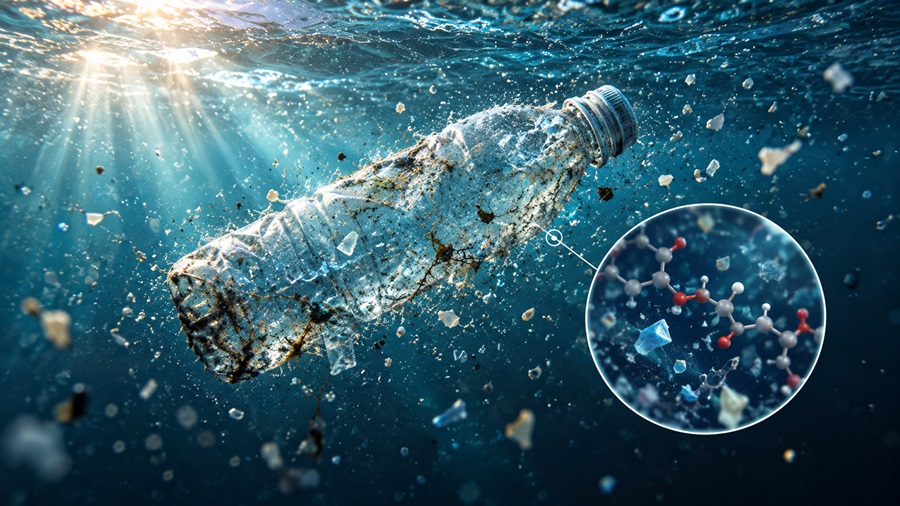
Nanoplastics are tiny bits of plastic. Many sources define them as less than 1 micrometre (µm), but there is no one size rule. Sun, wear, and weather can break big plastic into smaller bits. We know people and wildlife may meet these bits. But we do not yet know the health risk from daily exposure.
Plastic can break down far past the point we can see. A bottle, tire, or shirt can shed tiny bits over time. Some bits may shrink until only lab tools can find them.
Here is what we know, what we do not know, and why it matters.
What are nanoplastics?
Nanoplastics are tiny bits of plastic. Many groups use this term for bits less than 1 µm wide. Some use a smaller limit: 100 nanometres (nm). One µm is 1,000 nm. There is no one size rule, so check how each study defines the term.
The U.S. Environmental Protection Agency (EPA) uses the less-than-1-µm rule. It also says larger bits can break down through sun, wear, and chemical change. The EPA explains its definition and this process in its microplastics research guide.
For scale, a human hair is much wider than a nanoplastic bit. We cannot see these bits with the naked eye.
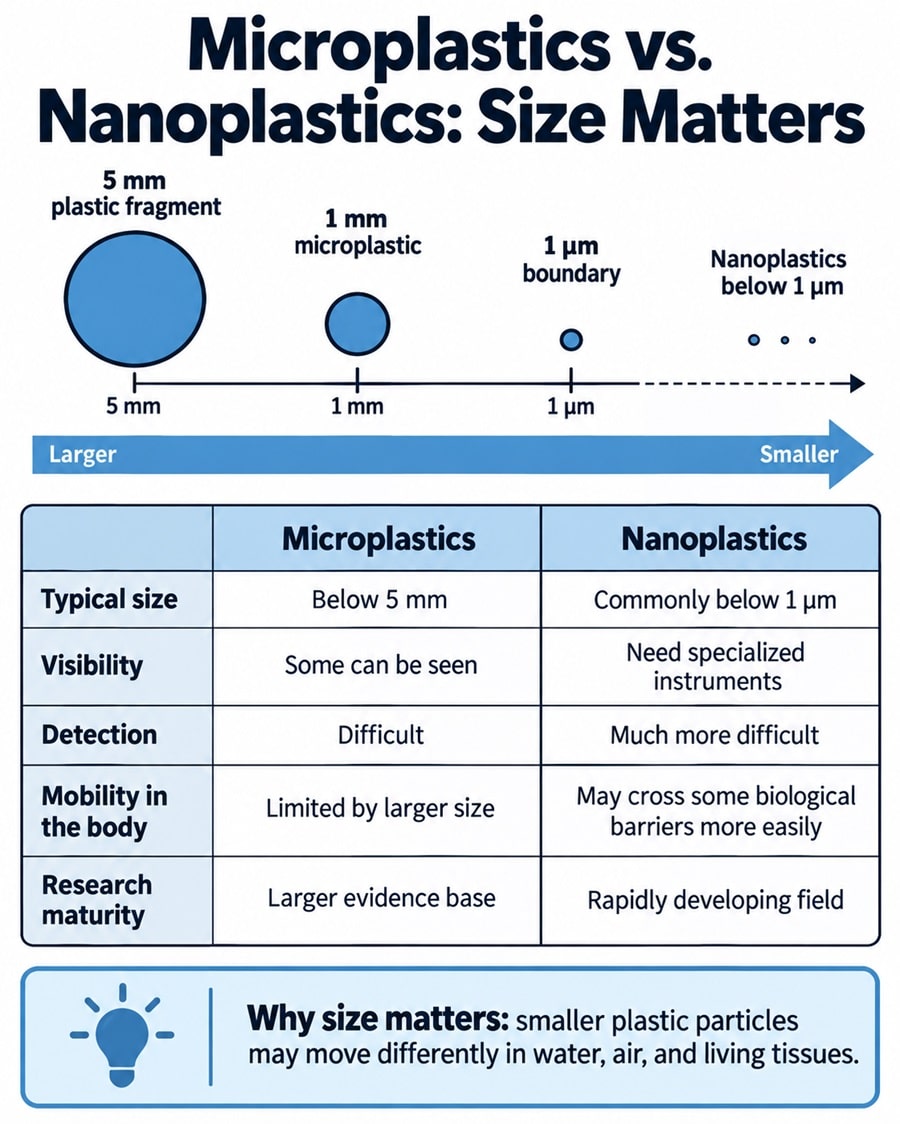
Microplastics vs. nanoplastics
Microplastics are plastic bits smaller than 5 mm in many common guides. Nanoplastics are much smaller. Some size systems count them as a type of microplastic. Others list them as a separate group. The cutoffs can vary.
Size is only one part of the story. The kind of plastic, its shape, surface, dose, and path into the body can also matter. A smaller bit is not always more harmful.
Where do nanoplastics come from?
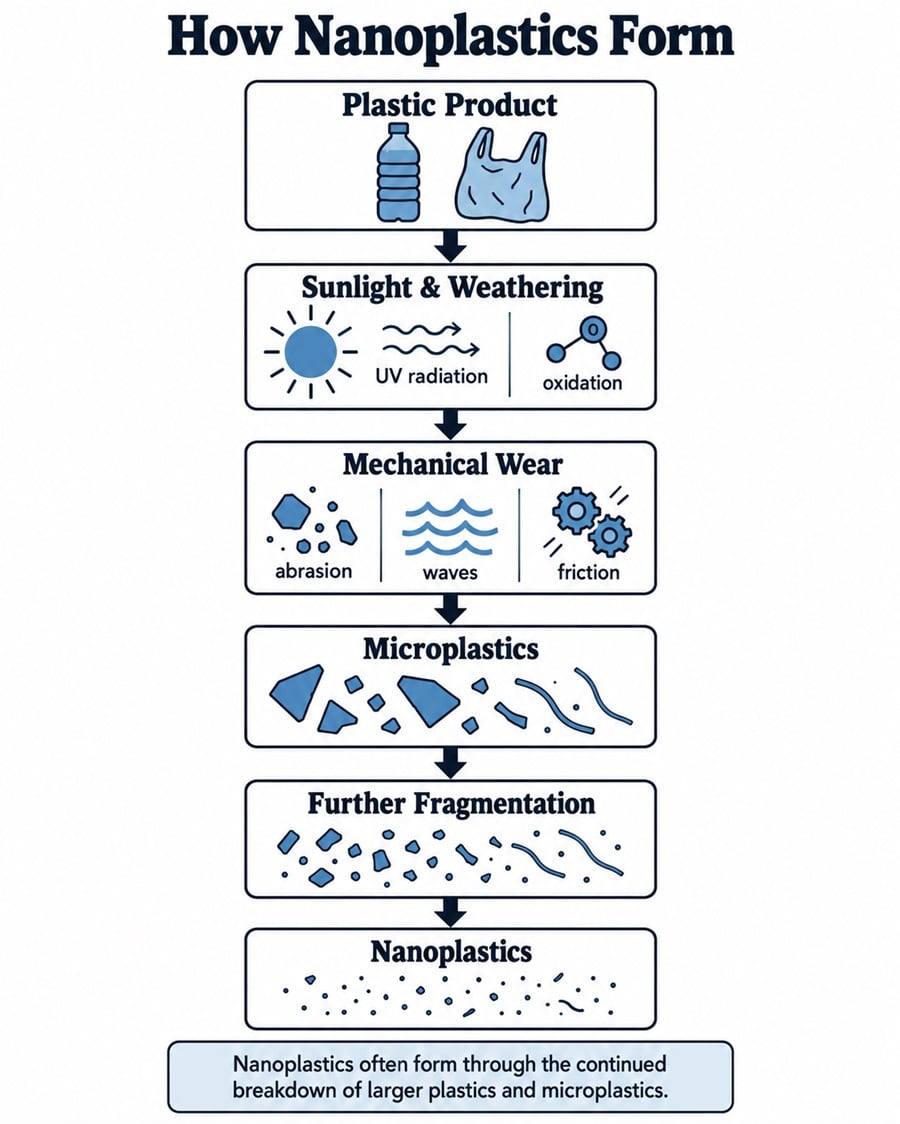
Many nanoplastics may form when larger plastic breaks down:
Plastic item → wear or sun damage → microplastic → smaller bits
Sunlight can weaken plastic. Waves, sand, roads, washing, and daily use can grind it down. Heat and air can also change its surface. Some tiny plastic bits may be made or released at small sizes from the start.
Common sources include food packs, tires, fake-fiber clothes, paint, fishing gear, plastic pellets, and plastic litter. Wastewater can carry bits from many of these sources.
Less plastic waste and less shedding mean fewer bits can break down later.
Where are nanoplastics found?
Researchers look for tiny plastic bits in water, soil, air, and food. These samples also hold natural bits that can look like plastic. This makes the results hard to trust or compare.
- Water: Studies test seas, rivers, lakes, wastewater, and tap water. They use different tools and size limits.
- Soil and mud: Farm plastic, litter, tires, and waste sludge may add plastic bits. Soil is hard to test because it has many other small parts.
- Air: Dust, traffic, clothes, and industry may release plastic bits. We do not yet know how much tiny plastic people breathe in each day.
- Food: Studies have found plastic bits in some food tests. But not all tests can find nanoplastics or tell them apart from natural matter.
Nanoplastics in food and drinking water
It is too soon to rank foods or water by how much nanoplastic they hold. Some tests only find larger microplastics. Others may miss the smallest bits or mistake natural matter for plastic.
The World Health Organization reviewed plastic in drinking water in 2019. It found big gaps in the data, most of all for the smallest bits. At that time, it did not call for routine checks of drinking water. Read the WHO report as a 2019 review, not a final answer for all types of exposure.
Why are nanoplastics hard to measure?
The bits are tiny and hide among many other parts in water, soil, food, and body samples. Tools do not all find the same sizes or types of plastic.
Plastic clothes, lab air, and tools can also add stray bits to a sample. Good studies check for this and state what their test can find.
Some tests measure the weight of plastic in a sample. Others count bits or look at each one. These results are not the same. A test that finds plastic material does not always prove that it found single nanoplastic bits.
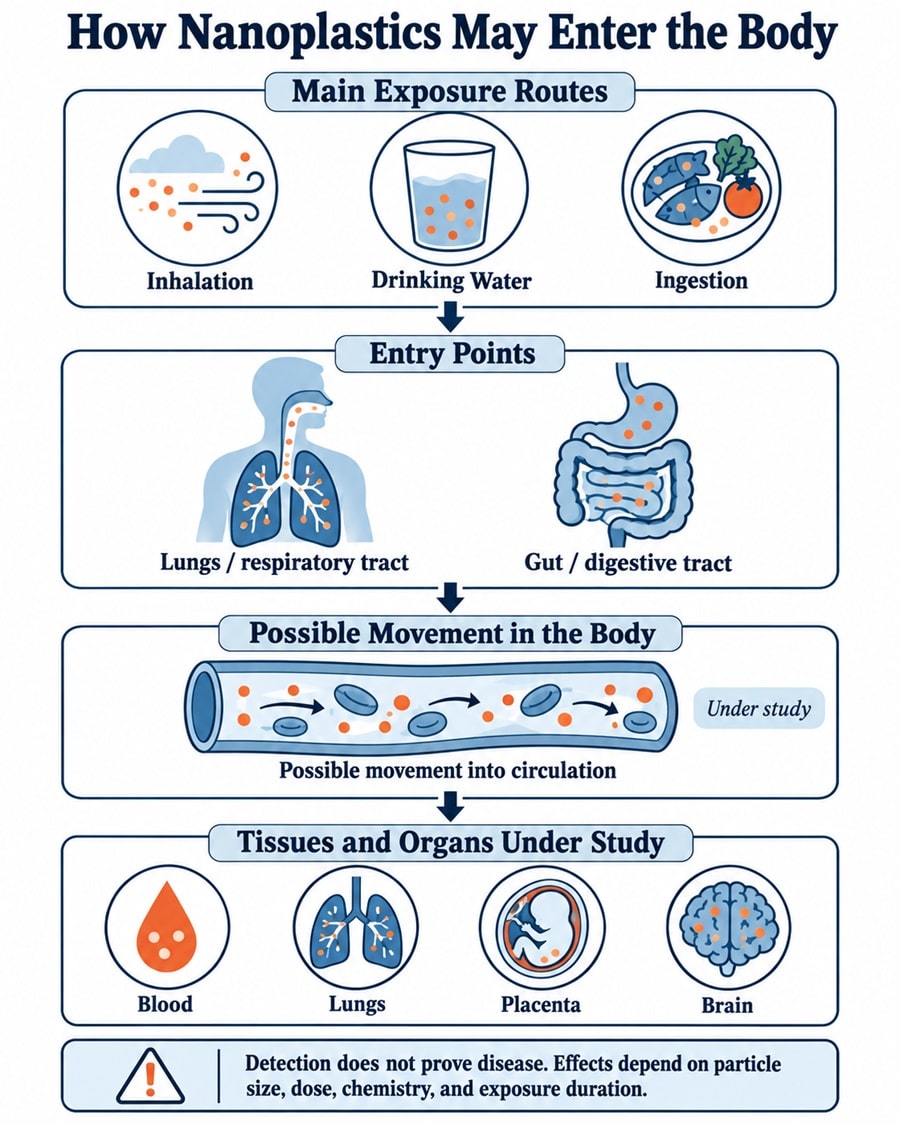
How do nanoplastics enter the body?
People may take in plastic bits in two main ways:
- By mouth: in food, water, or dust that lands on food.
- By breath: in air, though we do not yet know how much tiny plastic people breathe in each day.
Skin contact is also being studied. But a path into the body does not tell us how much gets in or what it may do.
Have nanoplastics been found in people?
Some studies report plastic-related matter in blood and other human samples. But test methods, size limits, and checks for stray plastic vary. Some tests may not show that the matter is made of nanoplastic bits.
A 2025 review in Nature Medicine says some lab tests show tiny plastic bits can pass through cell barriers. It also says we lack good data on how much people take in. Finding plastic matter in a sample does not prove it caused harm. It does not show how long it stayed or what it did.
What are the possible health effects?
Lab and animal studies test whether plastic bits can cause swelling, cell stress, or other changes. These tests can help guide research. But lab doses may not match the amount people meet in daily life.
One 2024 study in The New England Journal of Medicine found plastic bits in some neck artery plaques. It also found a link between those bits and later health events in that group of patients. The study did not prove that the bits caused the events. It also does not show the risk for everyone. Read the study for its methods and limits.
The short version:
- We may meet tiny plastic bits, but our level of exposure is not clear.
- Lab tests point to effects that need more study.
- We do not yet know the health risk from daily exposure.
A 2025 review in Nature Medicine also calls for better tests and more human studies before we can set a clear risk level.
How might nanoplastics affect wildlife?
Tiny plastic bits may be eaten by small water life, such as plankton. Scientists study how they may affect feeding, growth, health, and birth. They also study how bits may move from small animals to larger ones.
Lab tests do not always match life in the wild. It is also hard to tell the effects of nanoplastics from those of other small bits in nature.
Can water treatment remove nanoplastics?
Some filters may catch very small plastic bits. How well they work depends on the filter, the water, and the size of the bits. No one claim fits every plant or home filter.
Caught plastic is not gone. It may end up in a filter, sludge, or other waste. Do not assume a home filter catches all nanoplastics unless test data show what sizes it can remove.
How can we cut nanoplastic pollution?
It is very hard to clean tiny bits out of air, soil, and water. It is easier to stop plastic waste before it breaks down. Steps that may help include:
- Pick up and collect plastic waste so less reaches nature.
- Cut plastic shedding from tires, clothes, and paint.
- Keep plastic pellets from spilling in shipping and at work sites.
- Improve wastewater treatment and handle the waste it catches.
- Make goods that last longer and shed less.
- Use less throw-away plastic when a good option is on hand.
These steps will not stop all contact with plastic. They can cut the amount that may break down into smaller bits.
Are nanoplastics regulated?
Rules vary by place. In the EU, a 2023 rule limits some tiny plastic bits that makers add to products on purpose. It is not a limit for all plastic in nature or drinking water. The European Commission explains the rule.
It is hard to set limits when tests do not yet measure all tiny plastic bits in the same way.
What do scientists still need to learn?
Scientists need better ways to test these bits and answer key questions:
- How much do people meet in daily life?
- Which tests can find the smallest bits with care?
- Do size, shape, and type change what the bits do?
- How long do bits stay in the body?
- What amount, if any, can harm health?
- Do lab tests match what happens in nature and in people?
Not all plastic bits act the same way. So we cannot give every nanoplastic one risk score.
FAQs
What are nanoplastics?
They are tiny bits of plastic, often less than 1 µm wide. Some guides use a smaller size limit.
What is the difference between microplastics and nanoplastics?
Microplastics are often defined as less than 5 mm. Nanoplastics are much smaller. The exact cutoff can vary.
Are nanoplastics in people?
Some studies report plastic-related matter in human samples. Test limits vary, and finding it does not prove harm.
Are nanoplastics harmful?
Lab tests raise questions, but we do not yet know the risk from daily exposure.
Are nanoplastics in drinking water?
Scientists are testing for them, but the smallest bits are hard to find and count.
Can filters remove nanoplastics?
Some filters may catch small bits, but results vary. Check test data for the filter and the size of bits it was tested on.
The bottom line
Nanoplastics are tiny bits of plastic. Many may form as larger plastic breaks down. But there is no one size rule, and tests do not find every bit.
Scientists are studying how people and wildlife meet these bits and what they may do. Finding plastic in a sample is not proof that it caused harm. We do not yet know the health risk from daily exposure. Cutting plastic waste and shedding can help prevent more tiny bits from forming.
Leave a Reply