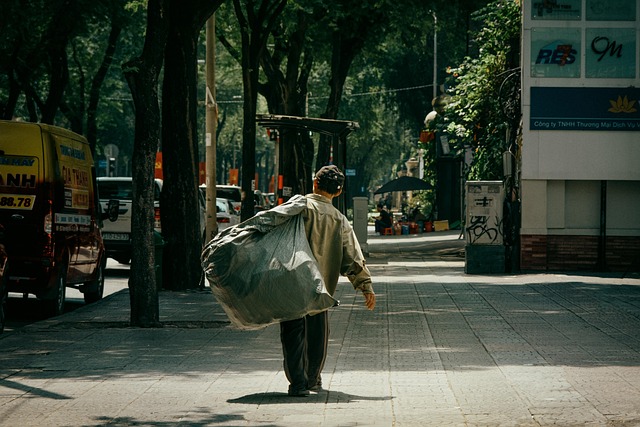
Recycling access is not equal for everyone. One household may have a recycling cart collected every week, while another has no recycling service in its apartment building. In rural communities, residents may have to drive considerable distances to find a recycling drop-off center.
All three households generate packaging waste. But their opportunities to recycle it are very different.
That gap matters. Recycling programs often encourage people to separate their waste and recycle more, yet those instructions assume that suitable collection services are available.
For many households, the problem is not simply knowing what belongs in a recycling bin. It is having a bin, a reliable collection service, or a practical way to reach a recycling center.
Understanding these differences is essential to making recycling more accessible, affordable, and fair.
Quick Answer: Why Is Recycling Access Unequal?
Recycling access is unequal because collection services, infrastructure, funding, and housing requirements differ between communities. Apartment residents may lack on-property recycling, rural households may face long travel distances, and lower-income households can encounter affordability and transportation barriers. Improving access requires reliable collection services, fair funding, convenient recycling locations, and policies that include underserved communities.
What Does Recycling Access Mean?
Recycling access means having a practical way to place accepted recyclable materials into a collection system.
For some households, that means a dedicated curbside recycling cart. For others, it means shared recycling containers in an apartment building or a nearby drop-off center.
But simply having a recycling facility somewhere in the community does not mean everyone can use it.
Having a Recycling Service vs. Being Able to Use It
Consider a household living 20 miles from the nearest recycling center.
Technically, a collection option exists. But using it requires transportation, fuel, time, and somewhere to store recyclables between trips.
A household without a vehicle may have little practical access.
The same problem can occur in apartment buildings.
A property might have one recycling dumpster, but if it is regularly overflowing, poorly maintained, or difficult to reach, residents may struggle to use the service.
Access, participation, and successful recycling are three different things.
Access means a service is available. Participation means people use it. Successful recycling means collected materials are actually processed into usable material.
A community needs all three, but access comes first.
Our guide to plastic waste collection methods explains the main collection options. This article examines whether those options are available to everyone.
Why Recycling Access Is an Environmental Justice Issue
Environmental justice concerns how environmental benefits, risks, and public services are distributed between communities.
In waste management, this includes who receives recycling collection, who pays for it, who participates in decisions, and who experiences the effects of waste handling and disposal.
A neighborhood without recycling service may have fewer opportunities to keep recyclable packaging out of ordinary garbage.
Meanwhile, communities near waste facilities may experience concerns involving truck traffic, odors, noise, and other local impacts.
These are related issues, although they are not identical.
Environmental justice does not mean every community faces the same problems. It means decisions about recycling and waste infrastructure should consider how those decisions affect different populations.
Who Has Access to Recycling in the United States?
Recycling collection is available to many U.S. households, but the national figures hide substantial differences.
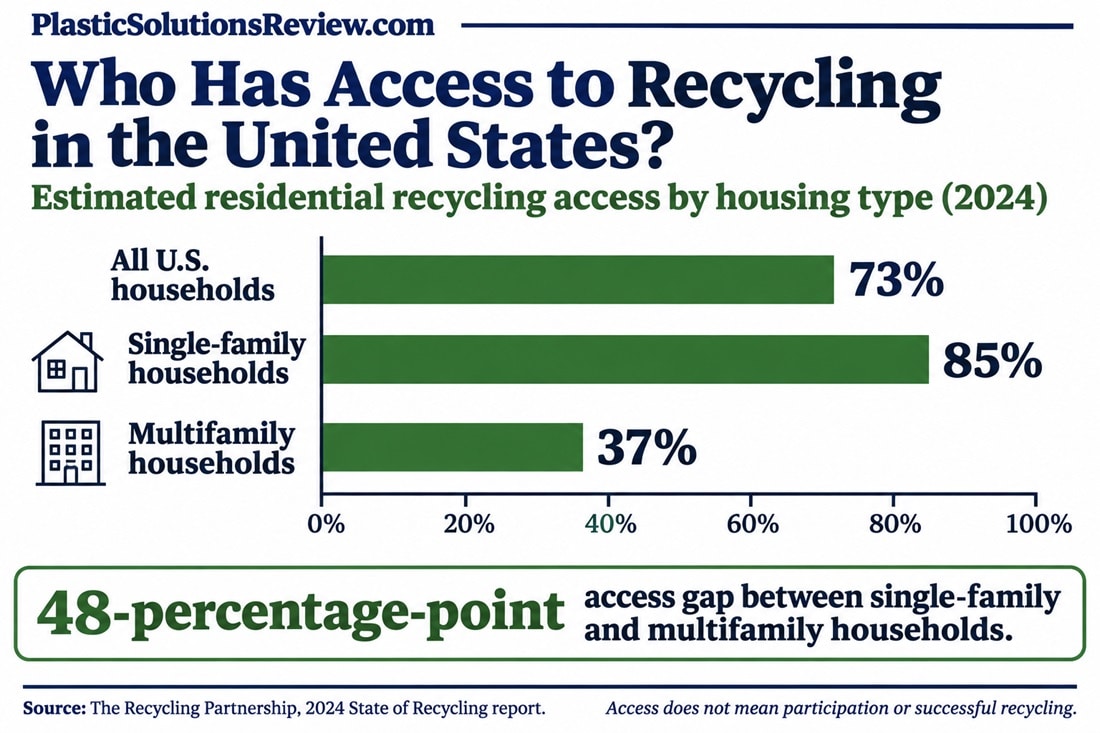
According to The Recycling Partnership’s 2024 State of Recycling report, an estimated 73% of U.S. households had access to residential recycling.
The difference between single-family homes and multifamily housing was particularly large.
| Household category | Recycling access |
| All U.S. households | 73% |
| Single-family households | 85% |
| Multifamily households | 37% |
Source: The Recycling Partnership, 2024, as also reported by the National Academies of Sciences, Engineering, and Medicine in 2025. These estimates measure access under the study’s methodology, not household recycling participation or successful recycling.
Recycling Access by Housing Type
The figures indicate that approximately 85% of single-family households had recycling access, compared with only 37% of multifamily households.
That is a 48-percentage-point difference.
For apartment residents, the gap is especially important because they often depend on property owners or management companies to arrange recycling services.
A homeowner may receive a recycling cart directly from a municipal collection program. Someone renting an apartment may have no equivalent option unless the building provides it.
The data do not mean that every apartment without on-property recycling has no alternative collection service nearby.
They do show that convenient residential recycling access is far less common in multifamily housing.
Why National Averages Hide Local Gaps
A nationwide access figure cannot describe every neighborhood.
Two cities may have similar overall recycling coverage but very different service arrangements.
One may provide curbside collection to most households, including apartment buildings. Another may rely heavily on drop-off centers or leave multifamily collection arrangements to individual property owners.
Rural areas create another challenge because households are more widely dispersed.
The Recycling Partnership’s 2026 State of Recycling reporting continues to identify multifamily housing and rural communities as important service gaps.
That suggests improving recycling access requires more than expanding the number of recycling facilities.
Communities also need to consider where services operate and whether households can realistically use them.
Why Apartment Residents Often Have Less Recycling Access
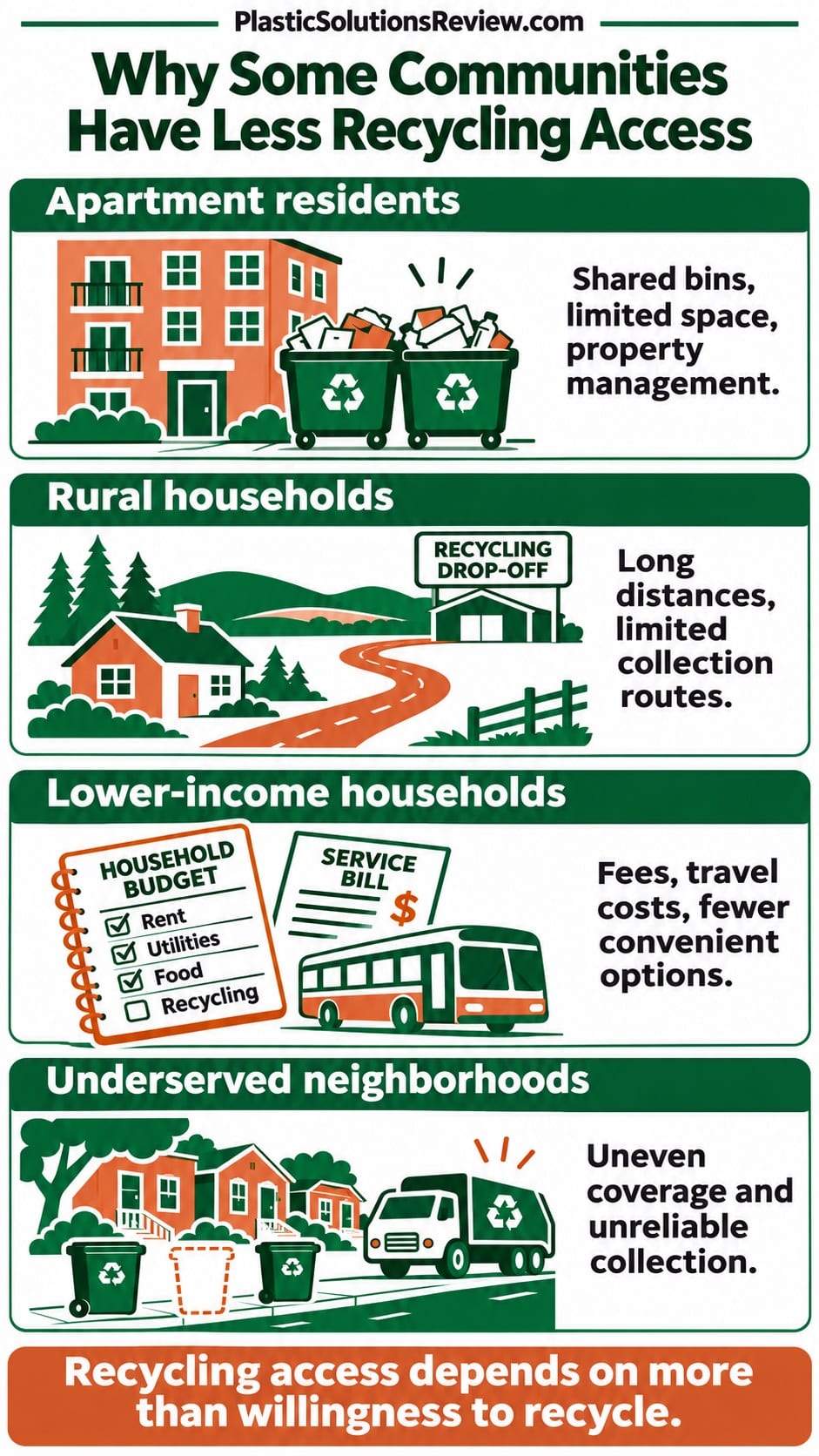
Apartments present collection challenges that differ from those faced by single-family homes.
Many buildings have shared waste areas, limited storage space, and several households using the same containers.
The property owner or manager often plays a central role in arranging collection services.
Shared Bins, Limited Space, and Property Management
A single-family home usually has a clear place to store a recycling cart.
Apartment residents may need to carry recyclables to a shared collection area, sometimes located far from their unit.
The building may have enough space for general garbage containers but not enough dedicated recycling capacity.
In older properties, collection areas may not have been designed to accommodate multiple waste streams.
Even when recycling is available, the service can become unreliable if containers fill before the next collection.
Property management matters, too.
Someone needs to arrange collection contracts, maintain the bins, explain accepted materials, and respond when the service fails.
Without those arrangements, recycling may become inconvenient or unavailable.
How Local Requirements Affect Apartment Recycling
Local laws can influence whether multifamily properties provide recycling.
Some municipalities require apartment buildings to offer collection services. Others leave the decision largely to property owners or private contractors.
Requirements can improve access, but passing a rule is only the beginning.
Buildings may need additional containers, suitable collection space, contracts with waste haulers, and guidance for residents.
Local authorities may also need to check whether services are actually operating.
The issue is not whether apartment residents care about recycling. It is whether their housing arrangements provide the same practical opportunities available to other households.
Rural Recycling Access: When Distance Becomes a Barrier
Recycling collection is more difficult to organize in many rural communities.
The main challenge is distance.
A truck serving a dense neighborhood can collect recyclables from numerous households along a relatively short route.
In a rural area, it may travel much farther between homes while collecting smaller amounts of material.
That changes the economics of collection.
Why Recycling Collection Is Harder in Low-Density Areas
Waste collection involves labor, vehicles, fuel, maintenance, and transportation.
When households are spread over large areas, those costs must be supported by fewer customers or smaller collection volumes.
A municipality may struggle to justify weekly curbside recycling where routes are long and material volumes are low.
However, rural curbside collection is not always impossible.
Regional cooperation, shared routes, suitable vehicles, and coordinated contracts can make services practical in some communities.
The important point is that rural collection requires different planning from collection in densely populated cities.
When Drop-Off Centers Are Not Enough
Drop-off centers are a common alternative where curbside service is unavailable.
They allow residents to bring accepted materials to a central location rather than requiring collection vehicles to visit every household.
But their usefulness depends on distance and convenience.
A recycling center that is open only a few hours each week may be difficult for working households to visit.
Residents without reliable transportation face additional barriers.
Long drives can also make recycling expensive in time and fuel, especially when households transport small quantities.
Better rural access may require regional collection partnerships, strategically located drop-off sites, or less frequent but dependable scheduled services.
The best arrangement depends on local population patterns, transport infrastructure, and funding.
How Income and Neighborhood Conditions Affect Recycling Access
Income does not determine whether someone wants to recycle. But household finances and neighborhood conditions can affect whether recycling is practical.
For example, a household may live in an area where recycling requires a separate subscription fee.
Another may have access only to a distant collection center.
Someone without a vehicle, flexible working hours, or sufficient storage space may find those arrangements difficult to use.
Affordability, Transport, and Housing Conditions
A recycling fee that is manageable for one household may be a significant expense for another.
The same applies to the cost of traveling to a drop-off center.
Housing conditions can also matter.
A renter may have limited control over waste collection arrangements, while a homeowner may be able to request or subscribe to a service directly.
These barriers can overlap, particularly where residents have limited transportation options or live in buildings without dedicated recycling infrastructure.
However, it would be misleading to assume that all low-income households have poor recycling access or that wealthier communities always have better services.
Access depends on local policy, funding, housing arrangements, and infrastructure.
What Research Shows About Geographic Inequality
A 2026 peer-reviewed study, Geospatial analysis reveals socioeconomic inequities in access to recycling infrastructure in the United States, examined the relationship between plastic waste generation, recycling infrastructure, and community characteristics.
Researchers identified geographic disparities in access to recycling infrastructure, including disadvantages affecting parts of the southern United States and sparsely populated areas.
The analysis linked some infrastructure gaps with socioeconomic characteristics such as lower income and educational attainment.
The findings support the need to consider geographic and social conditions when planning recycling infrastructure.
However, the study’s infrastructure measurements should not be confused with household curbside collection coverage.
A nearby material recovery facility does not guarantee that a neighborhood has regular recycling pickup.
Likewise, a household can have collection service even when the nearest processing facility is far away.
The study provides evidence about infrastructure distribution, while household service data show whether people have practical collection options.
Both are useful, but they answer different questions.
Environmental Justice: Who Bears the Burden of Waste Disposal?
Recycling access is only one part of waste-management equity.
Communities also differ in their exposure to facilities used to collect, transfer, process, or dispose of waste.
These differences raise questions about environmental burdens and public decision-making.
Recycling Gaps and Dependence on Residual-Waste Services
When households lack recycling services, otherwise recyclable packaging may end up in ordinary garbage.
That garbage is then managed through the local waste-disposal system.
Depending on the community, it may go to a landfill, waste-to-energy facility, or another permitted destination.
This does not mean recycling access alone determines how much waste a community produces.
It means that without a practical collection option, households have fewer ways to keep accepted recyclable materials out of the regular waste stream.
Our article on plastic waste in landfills explains what happens when plastic becomes part of landfilled residual waste.
Waste Facilities and Unequal Environmental Burdens
Some communities experience greater exposure to waste-management infrastructure than others.
Waste transfer stations, for example, can generate truck traffic, noise, odors, and concerns about local air quality.
The U.S. EPA has examined the siting of waste transfer stations in low-income communities and communities of color.
Its regulatory strategy for waste transfer stations specifically addresses environmental justice concerns related to facility locations and cumulative community burdens.
These concerns deserve attention during planning, permitting, and facility operation.
However, conditions vary between locations. The presence of a waste facility does not, by itself, establish that a community is experiencing unlawful pollution or measurable health damage.
Site-specific evidence is needed.
Why Facility Siting and Recycling Access Must Be Studied Separately
A neighborhood may lack convenient recycling collection without being located near a waste facility.
Another may have good recycling services while experiencing heavy truck traffic from a nearby transfer station.
Both situations matter, but they require different evidence and solutions.
Improving recycling access involves service design, funding, and collection infrastructure.
Addressing waste-facility burdens may require better siting decisions, environmental monitoring, community consultation, and enforcement of operating standards.
Environmental justice policies should examine both issues without assuming they always occur together.
Who Pays for Recycling Collection?
Collection infrastructure has operating costs, whether residents receive a separate bill or not.
The way those costs are shared can affect affordability and service availability.
Different communities use different funding arrangements.
| Funding model | How it works | Main equity consideration |
| Tax-funded municipal service | Collection supported through public revenue | Service depends on funding and coverage decisions |
| Household or property fees | Residents or property owners pay service charges | Direct charges may be difficult for some households |
| Private collection contracts | Haulers operate under public or private agreements | Coverage and cost depend on contract terms |
| Extended Producer Responsibility | Covered producers finance defined recycling responsibilities | Benefits depend on how funding is allocated and services expand |
Tax-Funded and Municipal Collection Services
Some local governments fund recycling through general taxes or waste-management budgets.
This can spread collection costs across a broad population rather than requiring each household to arrange a separate service.
But funding does not guarantee equal coverage.
A municipality may have limited resources or collection contracts that do not adequately cover every housing type.
Equity therefore depends partly on how service decisions are made and which communities receive investment.
Subscription Fees and Private Collection Contracts
Other communities use household subscription fees, property charges, or private waste-hauling contracts.
In these arrangements, residents may pay directly or through rent, housing association fees, or property-management expenses.
The cost and availability of service can vary.
Private collection is not automatically less equitable than publicly operated collection. Much depends on contract requirements, public oversight, and whether service standards apply across the community.
Problems arise when households cannot afford the required service or when no suitable provider operates in their area.
Why the Cost Burden Is Not Always Equitable
A fixed monthly fee takes up a larger share of a low-income household’s budget than that of a higher-income household.
That is a basic affordability concern.
However, it does not prove that lower-income communities universally pay higher recycling fees.
Local fees, taxes, subsidies, and collection arrangements differ too much to support that general claim.
An equitable funding approach should consider both the cost of providing service and a household’s ability to access it.
Can Extended Producer Responsibility Improve Recycling Access?
Extended Producer Responsibility, usually shortened to EPR, is one approach to changing how packaging waste is financed and managed.
Under packaging EPR laws, producers have defined responsibilities for the packaging they place on the market.
Those responsibilities may include financing collection, recycling, public education, or infrastructure improvements.
How EPR Changes Recycling Funding
Traditionally, local governments and residents have carried substantial responsibility for household waste collection.
Packaging EPR shifts certain financial and organizational obligations toward producers.
A producer responsibility organization may collect fees from participating businesses and use the funding to support recycling services under an approved program.
The goal is not simply to raise money.
Well-designed EPR can create incentives to improve packaging recyclability, strengthen collection infrastructure, and reduce gaps in service.
But results depend on the law and how it is implemented.
Producer fees may also affect product costs. Shifting financial responsibility does not automatically remove every burden from consumers.
What Is Happening in U.S. States?
As of November 2026, seven U.S. states had enacted comprehensive packaging EPR laws:
- Maine
- Oregon
- Colorado
- California
- Minnesota
- Maryland
- Washington
The laws differ in coverage, implementation schedules, producer requirements, and funding arrangements.
Oregon offers an important example.
Its Recycling Modernization Act began implementing major program changes on July 1, 2025.
According to the Oregon Department of Environmental Quality, the law is intended to expand recycling access, improve collection consistency, modernize processing infrastructure, and increase accountability.
The program specifically addresses service gaps affecting apartment residents and rural communities.
However, the existence of an EPR law does not mean every household immediately receives a new recycling service.
Infrastructure expansion takes time, and actual outcomes need to be measured.
What Equitable EPR Implementation Requires
EPR funding can support more equitable recycling, but only if programs identify and address service gaps.
That means setting clear goals for underserved communities and checking whether funding reaches them.
For example, a program might prioritize apartment buildings without on-property recycling or rural communities that lack practical collection points.
Progress should be measured through improved service coverage, collection reliability, and resident access.
Producer funding is a tool. Equity depends on how it is used.
What Do More Equitable Recycling Programs Look Like?
Improving recycling equity does not require every community to use the same collection model.
A dense apartment neighborhood and a remote rural county may need different services.
The objective is to give households reasonable opportunities to participate.
Recycling Services for Multifamily Buildings
Apartment recycling works best when collection is treated as a normal building service rather than an optional extra.
Property managers need suitable containers, enough collection capacity, and clear arrangements with waste haulers.
Residents need understandable instructions and convenient access to shared collection areas.
Local governments can support these efforts through service requirements, property-management guidance, technical assistance, and regular checks.
The most useful improvements are often practical: placing bins where residents can use them, providing sufficient collection frequency, and maintaining the service consistently.
Practical Collection Options for Rural Communities
Rural areas may benefit from shared regional collection infrastructure.
Several communities can cooperate to operate recycling centers, coordinate hauling contracts, or provide scheduled collection routes.
Drop-off sites should be placed where residents already travel when possible.
A recycling center next to a regularly visited community facility may be more useful than one located far from normal travel routes.
However, every option should be assessed for operating costs, accessibility, and actual material recovery.
The goal is not simply to establish more collection points. It is to provide a service people can realistically use.
Fair Funding and Targeted Infrastructure Investment
Public grants, municipal budgets, and producer-funded programs can help address documented service gaps.
Investment should be guided by reliable information about which households lack collection services.
For example, a city may discover that most single-family homes have recycling carts while many apartment buildings have no recycling provision.
That finding provides a stronger basis for targeted investment than a general campaign encouraging residents to recycle more.
Funding decisions should also account for maintaining services after initial equipment or infrastructure has been installed.
A new recycling bin is not a lasting improvement if regular collection cannot be funded.
Community Input and Accountability
Residents should have opportunities to explain the barriers they face.
A recycling program designed without community feedback may overlook practical problems involving building access, transportation, language, or collection schedules.
Public authorities can use surveys, consultations, and service records to identify those issues.
They should also report progress.
Useful measures include how many households have service, whether collection is reliable, how far residents must travel, and whether service charges create affordability concerns.
Accountability turns recycling equity from a general objective into something that can be evaluated.
Example: Improving Recycling in Orlando, Florida
Orlando provides a practical example of how policy and on-the-ground support can improve multifamily recycling.
In April 2019, the city adopted changes requiring commercial and multifamily properties to provide recycling opportunities.
But introducing a requirement did not automatically solve every collection problem.
Apartment buildings still needed suitable containers, clear instructions, and help communicating with residents.
Working with The Recycling Partnership, Orlando developed outreach and recycling-improvement projects for multifamily properties, including those serving low- and moderate-income residents.
The city’s multifamily recycling initiative included in-unit recycling bins, property signage, resident information sessions, and educational materials in multiple languages.
Program staff also conducted assessments before and after selected interventions.
Orlando reported improvements in recycling quality, including reduced contamination categories and increased quantities of recyclables in a studied property.
The case shows why recycling access requires more than passing a law.
A service requirement needs practical support so that building managers can operate the program and residents can use it.
How Can Cities Measure Recycling Equity?
Cities often measure recycling performance by the amount of material collected.
That is useful, but it does not show whether every household has a fair opportunity to participate.
A community with limited recycling coverage may report low collection volumes even when residents would use a service if one were available.
Access, Affordability, and Service Reliability
A more complete assessment should examine several indicators.
| Indicator | What it reveals |
| Household recycling access | Share of homes with an available collection service |
| Access by housing type | Differences between single-family and multifamily properties |
| Geographic coverage | Neighborhoods and rural areas with limited services |
| Distance to collection points | Practical accessibility where curbside service is absent |
| Service affordability | Whether collection charges create financial barriers |
| Collection reliability | Missed pickups, overflowing containers, and service interruptions |
| Resident participation | Whether households use the services available to them |
These measures help distinguish infrastructure problems from participation problems.
Why Participation Rates Alone Are Not Enough
Suppose one neighborhood has recycling carts delivered to every home while another has no regular collection.
Comparing their recycling participation rates without accounting for access would be misleading.
The second neighborhood cannot achieve the same participation through household effort alone.
Even where access exists, participation may depend on convenience, instructions, and service reliability.
Cities should therefore measure improvements in service coverage alongside the amount and quality of material collected.
That provides a fairer picture of how the system performs.
Frequently Asked Questions
Why Don’t Some Communities Have Recycling Services?
Recycling services may be limited by funding, collection distances, low population density, infrastructure availability, or local policy decisions. Some communities rely on drop-off centers instead of household pickup, while others have no convenient service.
Do Apartment Buildings Have to Provide Recycling?
Requirements vary by location. Some cities require multifamily properties to offer recycling, while others do not. Residents should check local waste-management rules and ask property managers about available services.
Why Is Recycling Harder in Rural Areas?
Rural households may be located far apart, making regular collection routes more expensive to operate. Drop-off centers can help, but long travel distances, limited opening hours, and transportation needs may reduce practical access.
How Does Income Affect Recycling Access?
Income can influence a household’s ability to pay service fees, travel to recycling centers, or live in housing with reliable collection. However, access also depends on local infrastructure, municipal policy, and housing arrangements.
Can EPR Laws Improve Recycling Access?
Yes. Packaging EPR laws can provide funding and responsibilities for improving collection services. Their effectiveness depends on implementation, service-expansion requirements, and whether investments reach communities with limited access.
What Can Residents Do When Recycling Is Unavailable?
Residents can check municipal collection options, ask about authorized drop-off locations, and contact property managers or local authorities about service availability. Community requests and participation in local planning can also help identify unmet recycling needs.
The Bottom Line
Recycling access is not simply a question of whether people want to recycle.
Housing arrangements, collection distances, service fees, and local infrastructure all influence whether households can participate.
The available evidence shows particularly large gaps between single-family and multifamily recycling access in the United States.
Closing those gaps requires reliable services, appropriate funding, practical collection arrangements, and accountability for reaching underserved communities.
A recycling system cannot be considered fully effective if large numbers of households have no realistic way to use it.
Leave a Reply