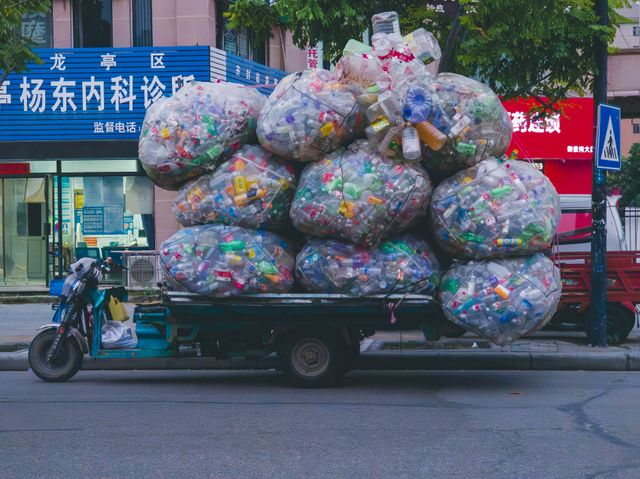
Plastic waste collection is the first step in getting used bottles, containers, and packaging out of the waste stream and into a recycling system. But how that collection happens depends on where people live, what materials their local program accepts, and the services available.
Some households put recyclables in a bin for weekly pickup. Others drive to a recycling center. In places with bottle deposit programs, consumers can return eligible containers to a store or collection point and receive a refund.
Each method has advantages and limitations. Understanding those differences helps explain why some communities collect more recyclable plastic than others—and why collecting plastic does not always mean it will be recycled.
Quick Answer: How Is Plastic Waste Collected?
Plastic waste is collected mainly through three methods: curbside recycling, drop-off centers, and deposit return systems. Curbside programs pick up accepted recyclables from homes, drop-off centers require residents to bring materials to collection points, and deposit systems refund money when eligible beverage containers are returned. The most suitable method depends on local infrastructure, convenience, costs, and the types of plastic accepted.
What Is Plastic Waste Collection?
Plastic waste collection is the process of gathering discarded plastic from homes, businesses, and public places and transporting it to a facility where it can be sorted, processed, or otherwise managed.
It is different from recycling itself.
Collection brings discarded material into the waste management system. Recycling involves processing suitable recovered material so it can be used again in manufacturing.
The distinction matters because a plastic bottle placed in a recycling bin has not yet been recycled. It still needs to be collected, sorted, and processed. It also needs a suitable end market.
The U.S. Environmental Protection Agency (EPA) identifies collection, processing, and remanufacturing as the three main stages of the recycling system.
How Plastic Waste Moves From Households to Collection Facilities
The collection process usually follows a simple sequence:
- Household separation: Residents place accepted plastic items in a recycling container or keep them aside for return.
- Temporary storage: Materials remain in household bins, shared containers, collection cages, or designated return points.
- Collection: A municipal truck, private hauler, or other collection service gathers the materials. Residents may instead deliver them to a drop-off center.
- Transportation: Collected material travels to a transfer station, sorting facility, or another receiving facility.
- Further processing: Suitable materials are separated and prepared for recycling. Unaccepted or unusable material may require another form of waste management.
Not every system follows exactly the same route. Some materials travel directly to specialized processors, while others pass through transfer stations or sorting facilities.
The collection method also affects the condition in which materials arrive. Plastic bottles collected separately may be easier to handle than containers mixed with food waste or other unwanted materials.
That is one reason collection systems matter long before recycling begins.
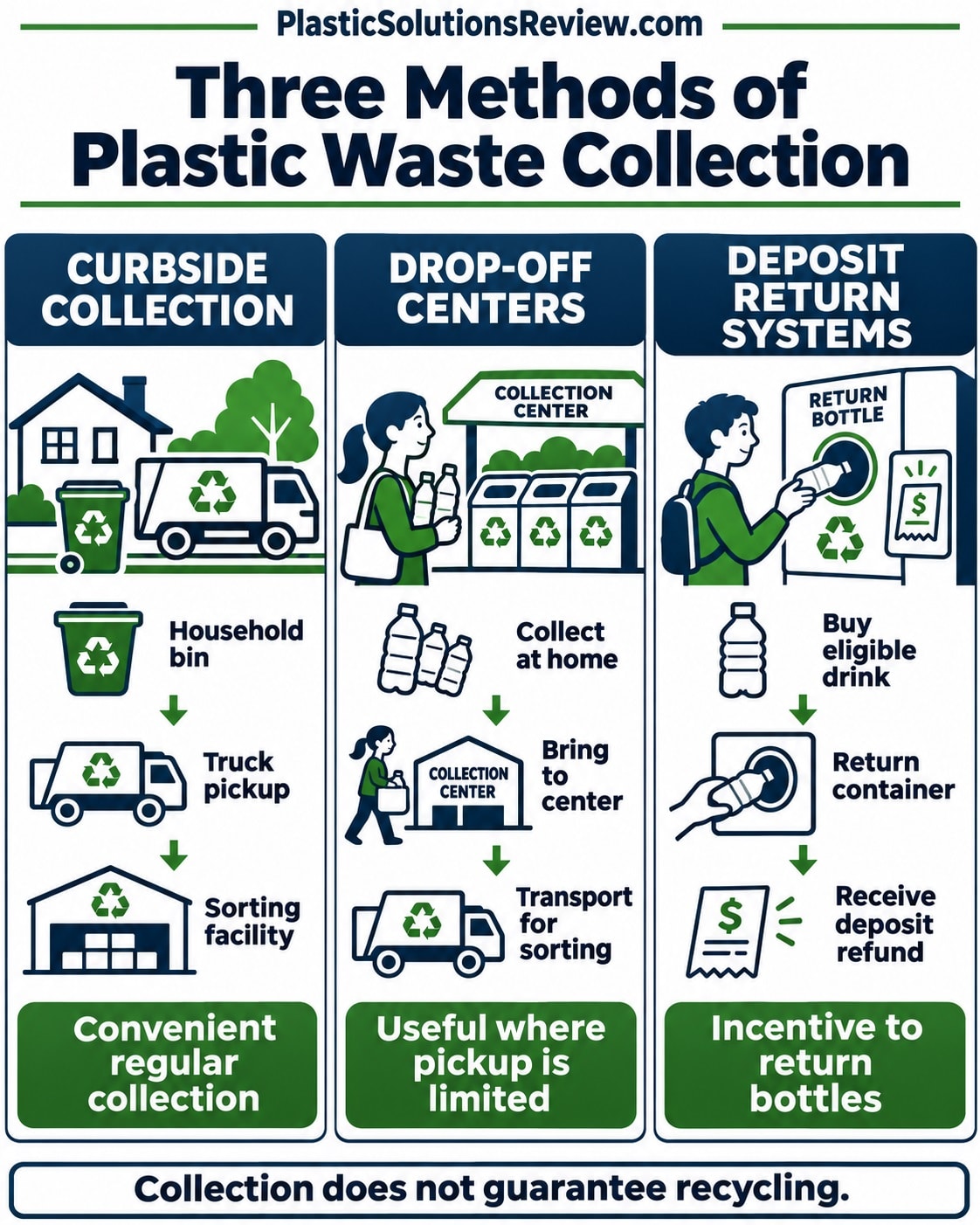
The Three Main Plastic Waste Collection Methods
Curbside collection, drop-off centers, and deposit return systems are common ways of collecting recyclable plastic from households.
They are not necessarily competing systems. A community might provide curbside recycling for everyday packaging, operate drop-off locations for additional materials, and use deposit programs for certain beverage containers.
-
Curbside Recycling Collection
Curbside recycling is a system in which households place accepted recyclable materials in containers for scheduled pickup.
Residents usually receive a dedicated recycling bin or cart. Depending on local rules, collection may take place weekly, every two weeks, or on another schedule.
A municipal department or private waste company collects the materials and transports them to a processing facility.
For households, the main advantage is convenience. People do not need to drive to a recycling center or arrange transportation for ordinary recyclable packaging.
Curbside collection can also make recycling part of a regular household routine. When residents know what belongs in the bin and when it will be collected, participation becomes easier.
However, curbside programs require ongoing investment. Trucks need fuel and maintenance, drivers must be paid, and collection routes must cover the communities receiving service.
The service is also less straightforward in some housing situations. Apartment buildings may need shared collection areas, while rural properties may be too far apart for frequent pickup to be economical.
Single-stream and separate collection
Curbside recycling does not always mean that every recyclable material goes into one bin.
In a single-stream system, residents place accepted paper, metal, plastic, and sometimes glass in the same recycling container.
In a multi-stream system, some materials are collected separately. This might mean different bins for paper and containers or separate collection for particular materials.
Single-stream collection can make recycling simpler for households. Separate collection may help keep certain materials cleaner.
Neither approach guarantees better results in every location. The outcome depends on how the service operates and what happens after collection.
We examine those differences in more detail in the next article, Single-Stream vs. Multi-Stream Recycling.
-
Recycling Drop-Off Centers
Drop-off recycling requires residents or businesses to bring recyclable materials to a designated collection location.
These locations may include municipal recycling centers, community collection points, supervised facilities, or permanent containers placed in accessible public areas.
Some accept several types of recyclable material. Others are designed for specific items, such as plastic bottles, cardboard, electronics, or plastic film.
Drop-off centers can be particularly useful where curbside recycling is unavailable or where collecting certain materials separately is more practical.
For example, a rural community might operate a central recycling site instead of sending a collection truck to every household. Residents can bring accepted materials when they travel into town.
Drop-off centers can also supplement curbside services. A household may have regular pickup for bottles and paper but need a separate collection point for flexible plastic packaging.
Another advantage is the opportunity to keep different materials apart. Clearly labeled containers or supervised unloading areas can help reduce mixing between material types.
But drop-off recycling places more responsibility on residents.
People need to know where the center is, which materials it accepts, and when it operates. They may also need a vehicle or another way to transport recyclables.
A recycling center that is difficult to reach may offer little practical value to someone without reliable transportation.
Long travel distances can also reduce the environmental benefit of collecting relatively small quantities of material, especially when residents make dedicated trips.
For that reason, drop-off programs work best when collection locations are convenient, instructions are clear, and residents can combine recycling trips with other travel.
-
Deposit Return Systems for Plastic Bottles
Deposit return systems collect eligible beverage containers by offering consumers a financial incentive to bring them back.
When someone buys a drink covered by the program, the purchase price includes a refundable deposit.
After using the drink, the consumer returns the empty container to an approved location and receives the deposit back.
Depending on the program, containers may be returned to a retailer, staffed redemption center, or reverse-vending machine.
Reverse-vending machines can identify eligible containers and issue a refund or voucher. Other systems use manual collection and counting.
The main difference from ordinary recycling is that the container has a refundable value.
A consumer who might otherwise discard a bottle has a reason to return it.
Deposit programs also create opportunities to collect certain beverage containers separately from other household waste.
This can help preserve material quality by reducing contact with food waste and unrelated items. However, the actual result depends on the program’s design and how returned containers are handled.
What can be returned?
Deposit return programs usually apply to selected beverage containers rather than all plastic packaging.
Eligible materials, container sizes, beverages, and deposit amounts vary by jurisdiction.
A PET water bottle might qualify, while a plastic food tray or detergent bottle may not.
These systems are therefore useful additions to wider recycling services, not replacements for every other collection method.
The U.S. EPA’s explanation of deposit-refund systems describes how refundable deposits can encourage the return of products and discourage improper disposal.
Program performance also needs careful interpretation. A high container return rate does not automatically mean the same percentage was successfully recycled.
The distinction becomes important when comparing deposit systems across countries or evaluating their environmental benefits.
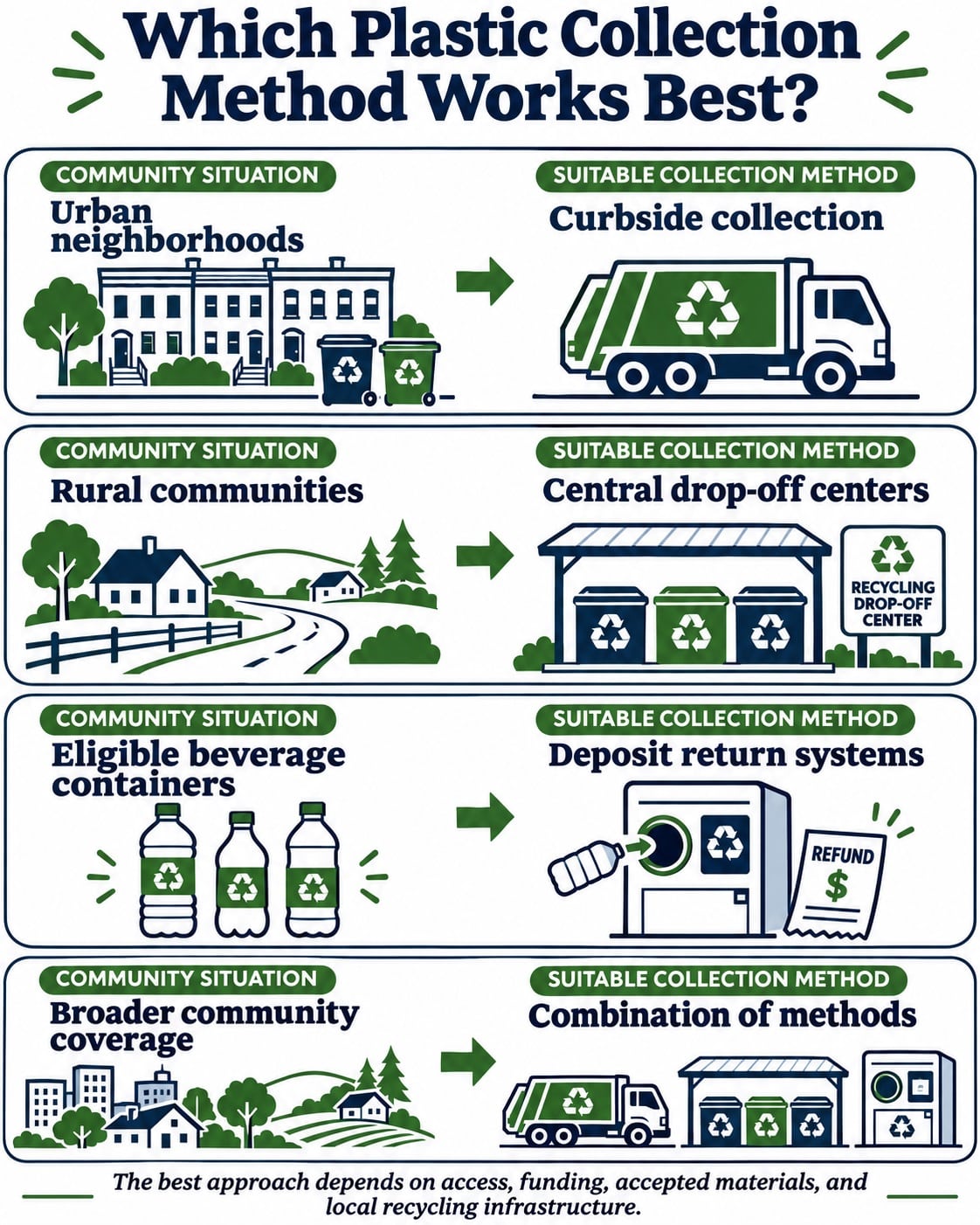
Curbside vs. Drop-Off vs. Deposit Return: Key Differences
The three collection methods solve different problems.
Curbside recycling focuses on regular household service. Drop-off centers provide collection at designated locations. Deposit return systems encourage people to bring back specific containers through a refund.
| Feature | Curbside collection | Drop-off centers | Deposit return systems |
| How it works | Recyclables picked up from homes or shared bins | Residents deliver materials to a collection point | Consumers return eligible containers for a deposit refund |
| Main advantage | Convenient regular collection | Useful where curbside service is unavailable | Financial incentive to return containers |
| Main limitation | Requires regular routes and service funding | Requires travel and personal effort | Covers only eligible containers |
| Materials accepted | Depends on local rules | Depends on facility | Defined by the deposit program |
| Collection frequency | Scheduled pickup | Depends on operating hours | Returns when collection points are available |
| Material separation | Single-stream or separate collection | May use separate containers | Usually separates covered beverage containers |
| Typical operator | Municipal authority or private hauler | Municipal authority, business, or nonprofit | Program administrator and participating return operators |
There is no universal winner.
Curbside collection may be the most convenient option for a household receiving reliable service. Drop-off centers can fill important gaps where regular pickup is impractical. Deposit systems can improve the collection of eligible beverage containers.
The strongest arrangement may combine several methods rather than depend on just one.
A city could offer curbside collection for common household packaging, a central drop-off facility for selected materials, and a bottle deposit program for beverages.
What matters is whether people can use the system consistently and whether collected materials have a workable path to recycling.
Which Plastics Can These Collection Systems Accept?
Not every plastic product belongs in every recycling collection system.
The type of plastic matters, but so do the item’s shape, size, condition, and the equipment and markets available to the local recycling program.
A package may be technically recyclable but still be excluded from municipal collection.
Commonly Collected Plastic Bottles and Rigid Containers
Many residential recycling programs accept certain rigid plastic bottles and containers.
Common examples include:
- PET bottles: Polyethylene terephthalate (PET) is widely used for bottled water and soft drinks. Learn more about PET plastic.
- HDPE containers: High-density polyethylene (HDPE) is commonly used in milk jugs, detergent bottles, and household product packaging. Our HDPE plastic guide explains the material in greater detail.
- PP containers: Polypropylene (PP) is used in some yogurt tubs, food containers, and packaging lids. Acceptance depends on the collection program.
These plastics may appear in the same curbside bin, be collected separately, or be accepted at particular drop-off locations.
One important point often causes confusion: the identification number on a plastic container does not guarantee that local recycling services accept it.
The number identifies the resin type. It does not confirm that suitable collection, processing, or recycling arrangements exist nearby.
Plastics That Often Require Separate Collection
Flexible plastic bags, wraps, and films may require special collection arrangements.
Putting them into ordinary curbside recycling can cause problems when local sorting systems are not designed to handle them.
Some retailers operate dedicated collection programs for certain clean plastic bags and films. Availability varies, so residents should confirm that a specific location is currently accepting the material.
Expanded polystyrene foam is another material that many curbside programs exclude. Some specialized facilities accept it, but others do not.
Compostable plastic packaging also needs separate attention. It should not be assumed suitable for conventional plastic recycling.
The EPA’s guidance on common recyclables explains why acceptance rules differ between products and local programs.
The safest approach is simple: check the instructions provided by the municipality, hauler, or collection facility before placing an unfamiliar item in the recycling stream.
What Determines the Cost of Plastic Waste Collection?
Collecting plastic waste costs money even when the recycling service appears free to households.
Trucks, collection containers, labor, fuel, storage, and transportation all have to be funded.
The final cost depends on the local collection model and operating conditions.
Collection Routes, Transport and Labor
Population density is one of the main factors affecting collection costs.
In a densely populated neighborhood, a truck can serve many households within a relatively short route.
In a rural community, the same truck might need to travel much farther between collection points.
The amount of material collected also matters. A vehicle traveling a long distance to collect a small quantity of recyclable plastic may have a higher cost per ton than a route collecting larger volumes.
Other cost factors include vehicle maintenance, staffing, collection frequency, container requirements, fuel consumption, and transportation distance to receiving facilities.
Drop-off systems have their own expenses. Collection sites need suitable containers, maintenance, transportation services, and sometimes staff supervision.
Deposit return programs require collection locations, return handling, administrative systems, and transportation arrangements.
Comparing these systems by cost alone can be misleading.
A lower collection expense does not necessarily produce a lower overall recycling cost if the collected material needs more sorting or contains more unwanted items.
Municipal Funding, Service Fees and Producer Responsibility
Waste collection can be funded in several ways.
Some municipalities support recycling through public revenue. Others charge residents directly or include recycling in a broader waste collection fee.
Private haulers may operate under municipal contracts or offer services directly to households and businesses.
Another approach is Extended Producer Responsibility (EPR).
Under EPR programs, producers of certain packaging materials take on defined financial or operational responsibilities for managing those materials after use.
Depending on the law, producer funding can support collection services, infrastructure, recycling operations, or other program requirements.
EPR does not eliminate collection costs. It changes how responsibilities and funding are allocated.
The U.S. EPA’s recycling infrastructure assessment provides broader context on investment needs and the challenges of improving collection and recycling systems.
The practical question for communities is not simply which method costs the least. It is which arrangement provides reliable access, collects useful material, and remains financially sustainable.
How Collection Methods Affect Recycling Quality
The way plastic is collected can influence what happens to it later.
Two collection programs might gather similar quantities of plastic but deliver material in very different conditions.
One stream may contain mostly accepted bottles and containers. Another may include food waste, plastic bags, and items the processing facility cannot handle.
Those differences can affect downstream sorting and recovery.
Separation at the Point of Collection
Separating materials before collection can help reduce mixing between incompatible items.
For example, a program that collects beverage bottles separately may receive a more consistent material stream than one accepting many types of packaging together.
However, separate collection also requires households to follow additional instructions and collection operators to manage the resulting streams.
Single-stream systems take a different approach by accepting several recyclable materials in one container.
That can make participation simpler, but places greater responsibility on subsequent sorting operations.
The outcome depends on both collection behavior and facility capability.
Contamination During Storage and Collection
Contamination occurs when unwanted material enters the recycling stream.
A bin intended for recyclable containers might contain leftover food, household trash, plastic film, or products the program does not accept.
Poorly labeled shared bins can make the problem worse. Residents may be unsure which items belong where.
Material can also become dirty or damaged during storage and handling.
These problems are not always caused by carelessness. Confusing instructions, inconsistent collection rules, and unsuitable bin arrangements can contribute.
The important point is that collection design influences the quality of material reaching sorting facilities.
Our guide to MRF contamination rates examines the measurement and consequences of contamination after materials enter a recovery facility.
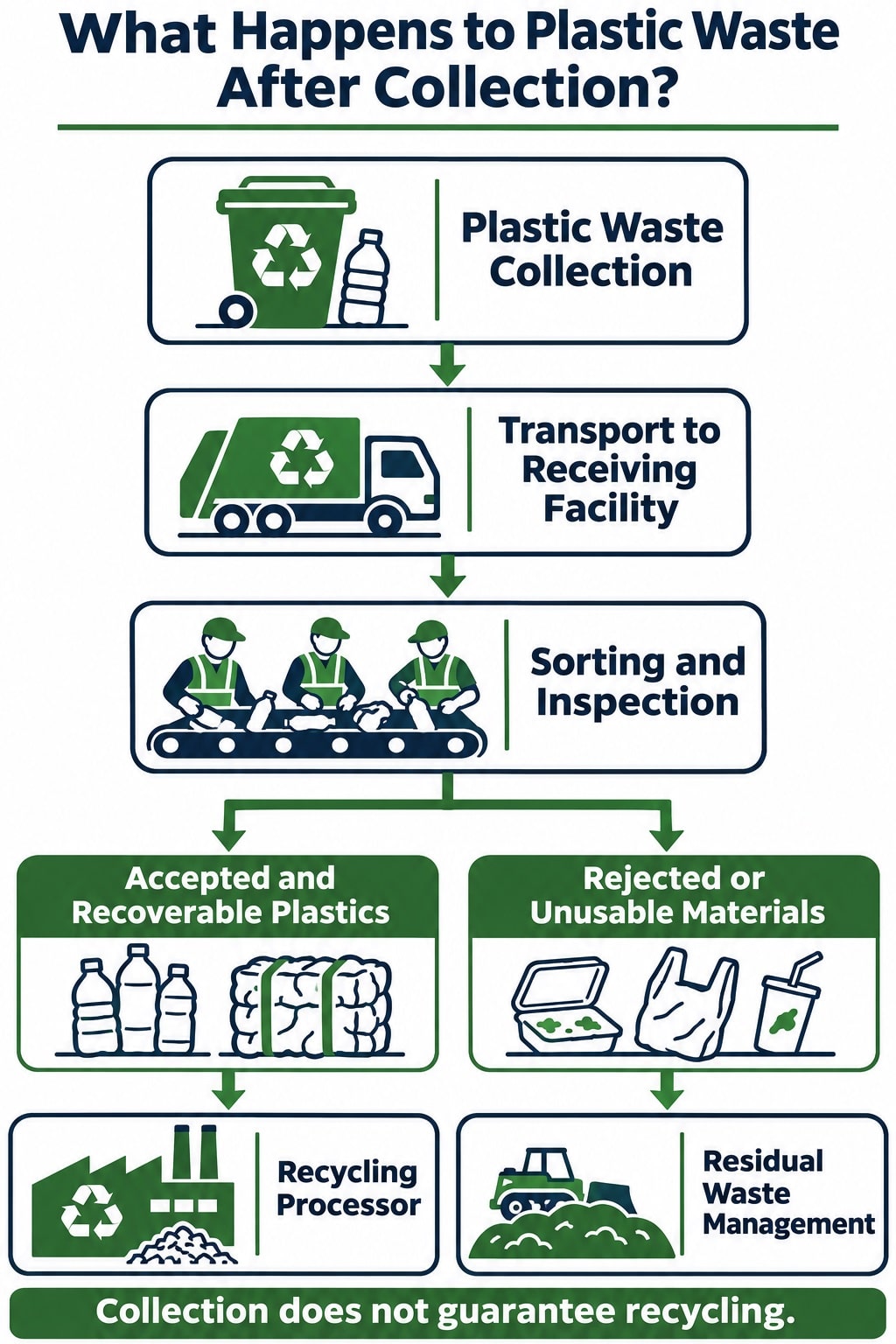
What Happens to Plastic Waste After Collection?
Once plastic waste is collected, it usually moves to a transfer station, material recovery facility, or another processing location.
The next stage depends on the type of collection system and the materials involved.
At a sorting facility, accepted recyclables may be separated into material categories, prepared for shipment, and sent to specialized processors.
These facilities play an important role, but they cannot necessarily recover every plastic item placed in a collection bin.
Our guide to how material recovery facilities work explains the sorting process in detail.
Plastic that cannot be recovered may become residual waste. Depending on local infrastructure and regulations, it may be sent to a landfill or another permitted treatment facility.
The article on plastic waste in landfills explains one of those possible destinations.
This is why collection figures should not be confused with recycling figures.
A community may successfully collect plastic packaging, but the amount ultimately recycled can be lower because of material losses, contamination, unsuitable products, or limited processing markets.
How Can Communities Improve Plastic Waste Collection?
An effective collection system should make it practical for people to participate while delivering material that recycling facilities can use.
Improvement does not always require building a completely new system.
Sometimes the biggest gains come from making existing services more reliable and understandable.
Clear collection rules are a starting point. Residents should be able to find an up-to-date list of accepted materials without searching through conflicting instructions.
Bin labels should identify accepted items clearly. Pictures of common packaging can be more useful than technical resin names alone.
Collection access also matters.
Apartment buildings need suitable recycling space, clear signage, and reliable pickup arrangements. Rural communities may benefit from convenient drop-off points, shared collection services, or coordinated regional programs where regular curbside pickup is impractical.
Communities should also consider whether deposit programs can complement other collection options.
Better coordination between collection operators and recycling facilities can prevent programs from accepting materials that cannot be processed locally.
The Recycling Partnership’s 2026 State of Recycling report emphasizes that effective recycling depends on several connected conditions: packaging recyclability, household access, resident participation, processing capability, and dependable markets for recovered materials.
Improving collection is therefore not just about asking people to recycle more. It also means designing services that people can use and ensuring that the collected material has a realistic destination.
Frequently Asked Questions
What Is the Most Common Method of Plastic Waste Collection?
The answer depends on the country and community. Curbside recycling is widely used in many urban and suburban areas, particularly in parts of North America. Drop-off centers, informal collection networks, and other systems also play important roles worldwide. There is no single method that dominates every region.
Is Curbside Recycling Better Than Drop-Off Recycling?
Curbside recycling is generally more convenient because households do not need to transport recyclable materials themselves. Drop-off centers can be useful where regular collection is unavailable or where materials require separate handling. The better option depends on accessibility, costs, participation, and local processing arrangements.
Do All Plastic Bottles Go Into Curbside Recycling Bins?
No. Although many programs accept PET and HDPE bottles, local rules vary. Some programs exclude certain containers, sizes, or materials. Residents should check their collection provider’s accepted-material list before placing bottles in the bin.
What Is the Difference Between Plastic Waste Collection and Recycling?
Plastic waste collection gathers discarded materials and moves them into the waste management system. Recycling is the later process of recovering and converting suitable material into usable manufacturing inputs. Collection is necessary for many recycling systems, but it does not guarantee that a collected item will be recycled.
What Happens if My Community Does Not Offer Curbside Recycling?
Check whether your local authority operates a recycling drop-off center or community collection point. Some retailers accept specific materials, while deposit programs may provide return options for eligible beverage containers. Confirm accepted materials and operating hours before visiting.
The Bottom Line
Plastic waste collection works through several methods, each suited to different circumstances. Curbside services make regular recycling convenient, drop-off centers help serve areas without household pickup, and deposit return systems encourage the return of eligible beverage containers.
No method guarantees recycling on its own. Reliable collection must be supported by clear instructions, appropriate processing infrastructure, and markets for recovered materials.
Understanding those connections is the first step toward improving how communities manage plastic waste.
Leave a Reply